Signed in as:
filler@godaddy.com


Malian designer Marie Kaba is bringing the ancestral language of Bogolan into contemporary couture, transforming cultural memory into a vision for the future.
There are fabrics that decorate the body, and there are fabrics that carry the memory of a people. For Marie Kaba, Founder and Creative Director of Haute Couture Chez Marie Kaba, Bogolan belongs firmly to the latter.
Rooted in the cultural heritage of Mali, Marie Kaba’s work is a dialogue between generations. She looks to the traditions, craftsmanship and visual language of her country not as elements to be preserved behind glass, but as living sources of creativity capable of evolving within contemporary fashion.
At the center of her creative universe is Bogolan, one of Mali’s most recognizable textile traditions. Its distinctive character, natural processes, patterns and cultural symbolism have made it an enduring expression of Malian identity.
For Kaba, however, Bogolan is more than a textile.
It is a language.
Through fabric, form and silhouette, she explores how the history of Mali can be carried forward while speaking to audiences far beyond its borders.
\

Marie Kaba’s approach begins with respect for the people and knowledge behind the cloth.
The story of Bogolan is inseparable from craftsmanship: from cotton and natural materials to the patient processes of preparing, dyeing and creating patterns on the textile. Behind each piece lies knowledge developed and transmitted across generations.
This human dimension is fundamental to Kaba’s work.
Rather than separating contemporary fashion from traditional craftsmanship, she brings the two together. Her designs allow ancestral techniques and cultural references to encounter new silhouettes and a contemporary aesthetic.
The result is not an attempt to reproduce the past.
It is an effort to allow heritage to continue living.
For Kaba, respecting tradition does not mean preventing it from changing. A cultural tradition survives precisely because each generation finds a way to understand it, protect it and carry it forward.
Her fashion therefore occupies an important space between preservation and reinvention.
That philosophy finds its clearest expression in “Bogolan Renaissance,” Marie Kaba’s creative vision for bringing Mali’s textile heritage into a new international chapter.
The idea of renaissance is significant.
It does not suggest that Bogolan has disappeared and needs to be rediscovered. Instead, it speaks to the possibility of seeing it differently — of allowing an ancestral textile to enter contemporary couture, international fashion and new cultural conversations while remaining connected to the people and traditions from which it comes.
In Bogolan Renaissance, fabric becomes narrative.
Patterns become vocabulary.
Textures become memory.
Silhouettes become a meeting point between Mali’s past and its future.
Through this approach, Kaba challenges the idea that African heritage must choose between tradition and modernity. Her work proposes something different: that the two can exist together, strengthening rather than diminishing one another.

An important part of Marie Kaba’s creative vision is the recognition of craftsmanship itself.
Before a finished creation reaches a runway, exhibition or client, there are human hands behind it.
There are artisans.
There is knowledge of materials.
There are techniques learned over years.
There are traditions transmitted through families and communities.
For Kaba, bringing Bogolan to an international audience also means bringing greater attention to this ecosystem of knowledge and craftsmanship.
This raises a larger question facing African fashion today: as African textiles and aesthetics gain greater international visibility, how can that recognition also create meaningful opportunities for the people and communities who preserve them?
It is a question of cultural identity, but also one of economic value.
The future of African fashion is not simply about exporting finished garments. It is also about recognizing the creative industries, artisans, materials and knowledge systems that exist across the continent and ensuring that Africa participates fully in the value created from its own heritage.
Marie Kaba’s work sits naturally within this conversation.
Fashion has long borrowed inspiration from Africa. Colors, textiles, techniques, symbols and silhouettes originating across the continent have repeatedly appeared in international fashion.
But Marie Kaba’s work reflects an important evolution in that relationship.
Africa does not need others to interpret its creativity for the world.
It has its own designers capable of telling its stories.
Through Haute Couture Chez Marie Kaba, Kaba presents a contemporary image of Mali created from within its own cultural experience — confident in its heritage and equally confident in its place within modern international fashion.
Her work does not treat Malian identity as an aesthetic trend.
It treats it as a foundation.
That distinction gives her creations their deeper significance. Bogolan is not simply incorporated because of its visual beauty; its history, craftsmanship and cultural identity are part of the meaning of the garment itself.
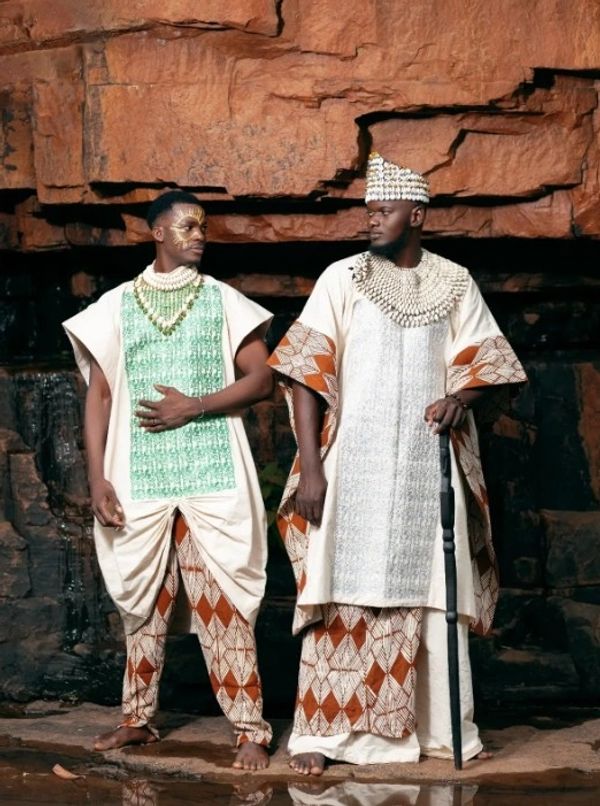
Marie Kaba’s work also demonstrates fashion’s extraordinary ability to cross borders.
A garment requires no translation.
A textile can introduce an audience to a culture before a single word is spoken. A pattern can inspire curiosity about its origins. A collection can open a conversation about history, craftsmanship, identity and the people behind it.
In this sense, Kaba’s fashion becomes a form of cultural diplomacy.
Through her creations, she offers audiences a window into another image of Mali — one defined by creativity, craftsmanship, cultural depth and contemporary ambition.
It is an image of Africa that recognizes its history without being confined by it.
This ability to communicate culture through design is particularly powerful in an increasingly interconnected fashion industry. As audiences seek greater authenticity and greater understanding of where garments and materials come from, designers such as Marie Kaba are demonstrating that heritage itself can be a source of innovation.

The next chapter of that journey will take Marie Kaba and Bogolan Renaissance to New York City, where she will represent Mali at World Fashion Exhibition® Times Square 2026. Presented by World Fashion Week® in partnership with Fashion Week Brooklyn / BK Style Foundation, the international program will take place from October 4–10, 2026, bringing together fashion, cultural heritage, sustainability and international creative exchange.
Kaba will introduce her work through the professional program in Brooklyn before presenting a special 10-look collection at Father Duffy Square, Times Square on October 9.
For a designer whose work is built around the journey of cultural heritage from one generation to another, Times Square offers a powerful new setting.
One of Mali’s most distinctive textile traditions will encounter one of the most internationally visible public spaces in the world.
But the significance lies not simply in where the clothes will be shown.
It lies in what they will carry with them.
The craftsmanship of Mali.
The hands of its artisans.
The visual language of Bogolan.
And the possibility of introducing these traditions to a new generation and an international audience.
Marie Kaba’s participation in New York will also extend beyond her collection.
For the World Fashion Exhibition® “Unity of Humanity” Grand Finale, she will create an exclusive sustainable couture piece representing Mali. The creation will subsequently become part of an international charitable auction connected to the humanitarian initiative “Give Your Light to the World — One Drop, One Life,” supporting humanitarian action in Africa, including efforts to expand access to safe drinking water.
The connection is fitting.
Kaba’s creative philosophy is ultimately about more than preserving an object or a textile. It is about people.
The artisans who carry knowledge.
The communities that preserve traditions.
The generations that inherit them.
And the possibility of using creativity to generate cultural, social and economic value.
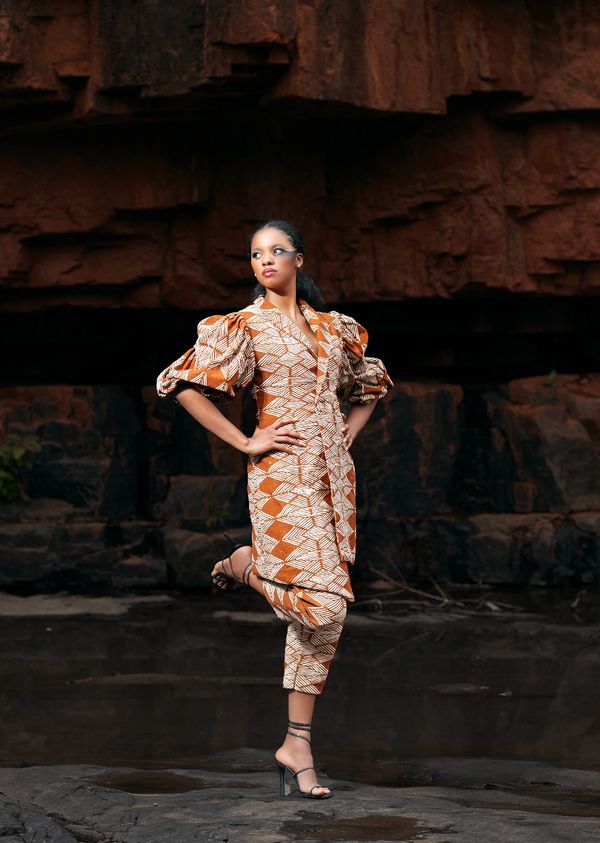
Perhaps the most compelling idea within Marie Kaba’s work is that heritage does not have to choose between preservation and progress.
Bogolan can carry centuries of cultural memory and still belong to tomorrow.
It can support artisans.
It can inspire new generations of designers.
It can create economic opportunity.
It can travel internationally without surrendering its identity.
And it can become a bridge through which people who may know little about Mali encounter the country through creativity.
That is the deeper meaning of Bogolan Renaissance.
Marie Kaba is not simply taking a Malian textile into contemporary fashion. She is participating in a larger movement in which African designers are defining for themselves how their heritage will enter the global creative conversation.
From Mali to the world, her work carries a clear message:
Tradition is not the opposite of the future. It can be the foundation upon which the future is created.
Marie Kaba
Founder & Creative Director — Haute Couture Chez Marie Kaba
Official Representative of the Republic of Mali — World Fashion Exhibition® Times Square 2026
Instagram: @haute_couture_chez_marie_kaba


